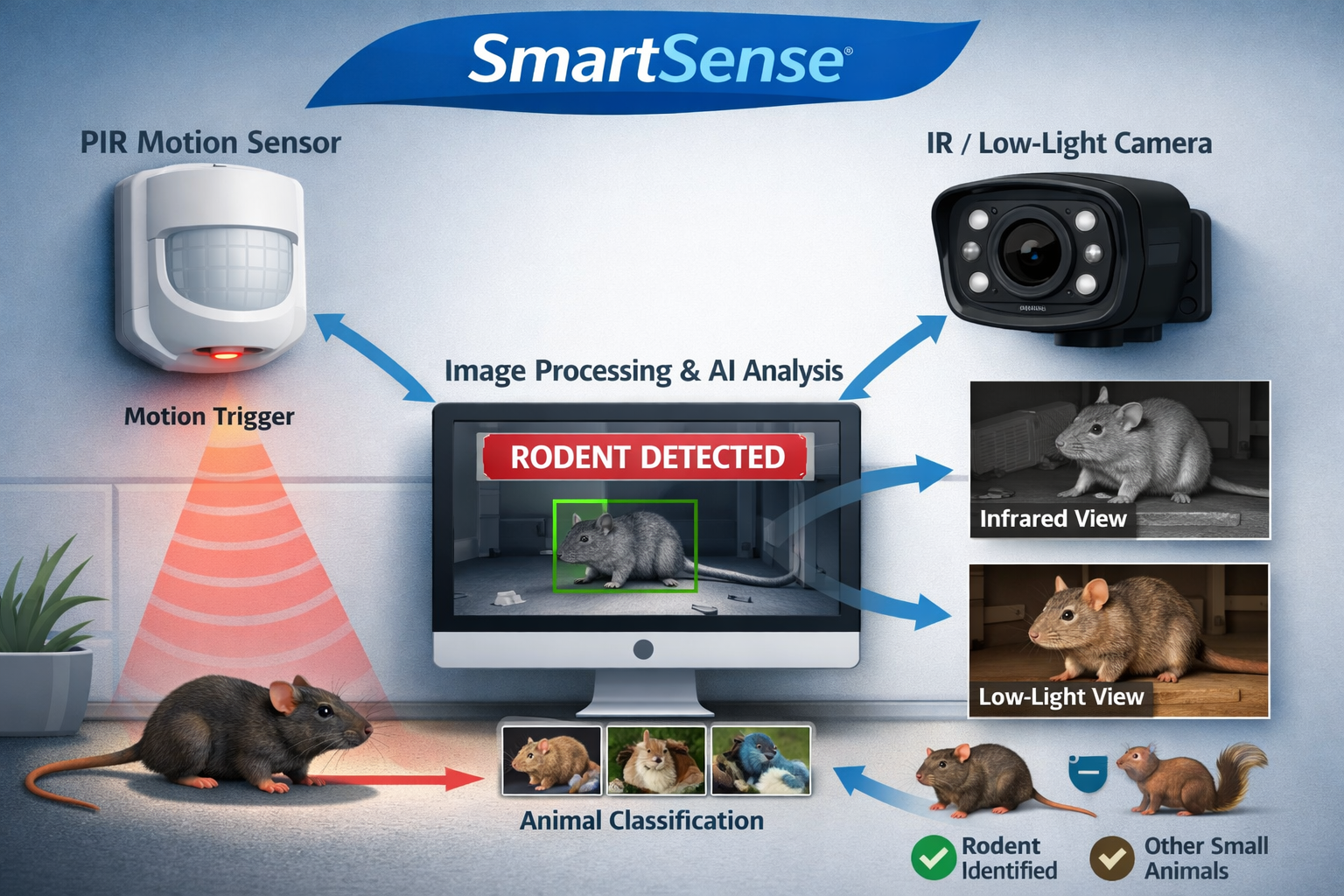
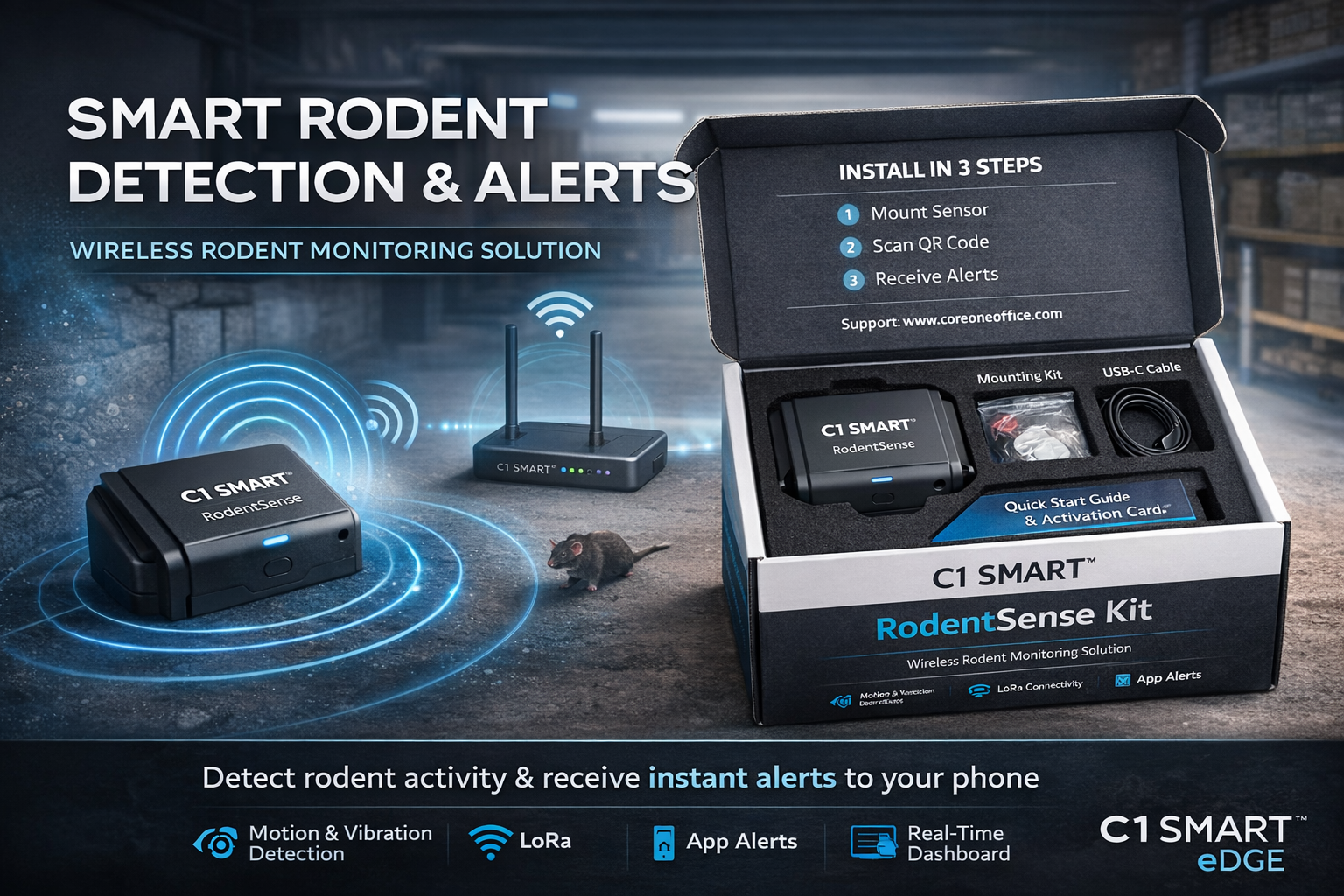
The C1 SMART™ RodentSense – Rodent Monitoring Smart Kit is a complete, ready-to-deploy solution designed to deliver intelligent rodent detection, monitoring, and risk assessment across commercial, industrial, and public facilities. The kit integrates wireless smart traps, motion and vibration sensors, environmental sensors, and C1 SMART™ Edge gateways to continuously capture rodent activity, trap events, tamper alerts, and environmental risk conditions in real time.
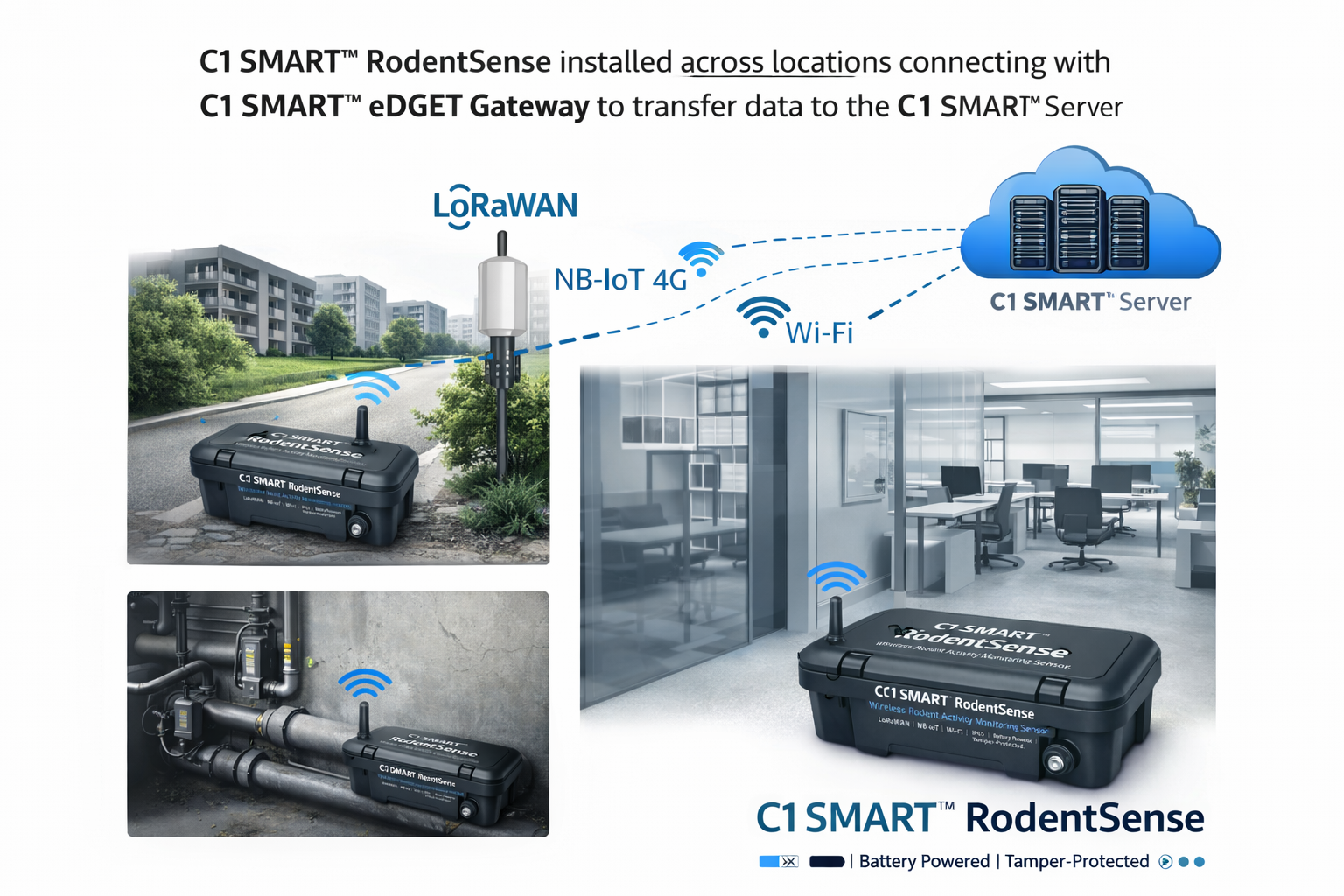
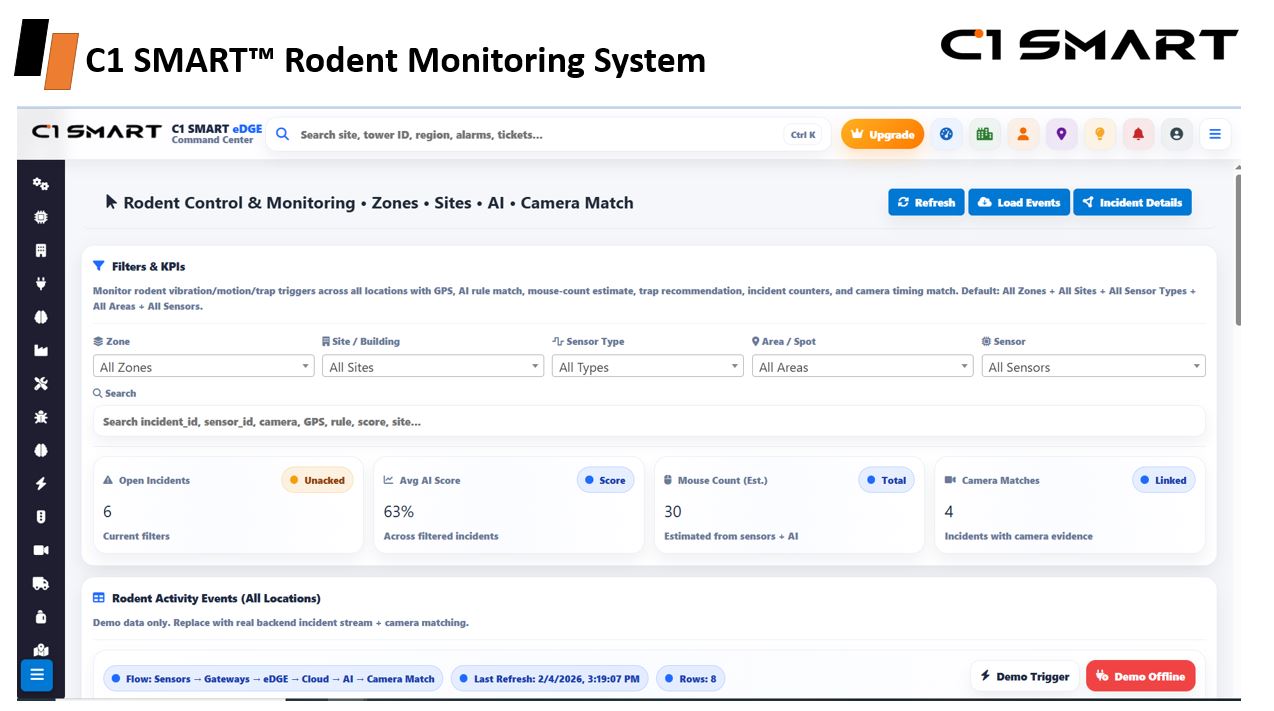
Data from the RodentSense Smart Kit is securely transmitted via LoRaWAN, NB-IoT, CAT-1, or Wi-Fi to the C1 SMART™ central monitoring platform, enabling live dashboards, instant alerts, and historical analytics. AI-driven intelligence supports predictive infestation trends, optimized sensor and trap placement, and automated response workflows. Seamless integration with CAFM, CMMS, compliance systems, and pest service operations ensures audit-ready reporting, faster response, and a fully connected smart facilities ecosystem for rodent monitoring and control.
Plug-and-deploy RodentSense kit with motion & vibration sensors.
Works with smart traps or as standalone detection nodes.
Indoor/outdoor ready with tamper and health monitoring.
LITE / PRO / ULTRA tiers for any facility size.
Fast installation with flexible station placement and zoning.
Supports LoRaWAN / NB-IoT / CAT-1 / Wi-Fi connectivity options.
Audit-ready logs: trap events, activity, and technician actions.
Ideal for single-site and multi-site deployments.
24/7 monitoring with instant alerts on rodent activity or trap trigger.
Zone-based deployment: rooms, corridors, docks, and perimeters.
Escalation rules for high-risk areas and repeated events.
Technician workflows with acknowledgements & closure.
Real-time alerts via SMS/WhatsApp/App/Email with severity levels.
Reduce manual inspection rounds and improve response time.
Track KPIs: hotspots, visits, closure rate, and recurrence.
Supports compliance reporting for audits and inspections.
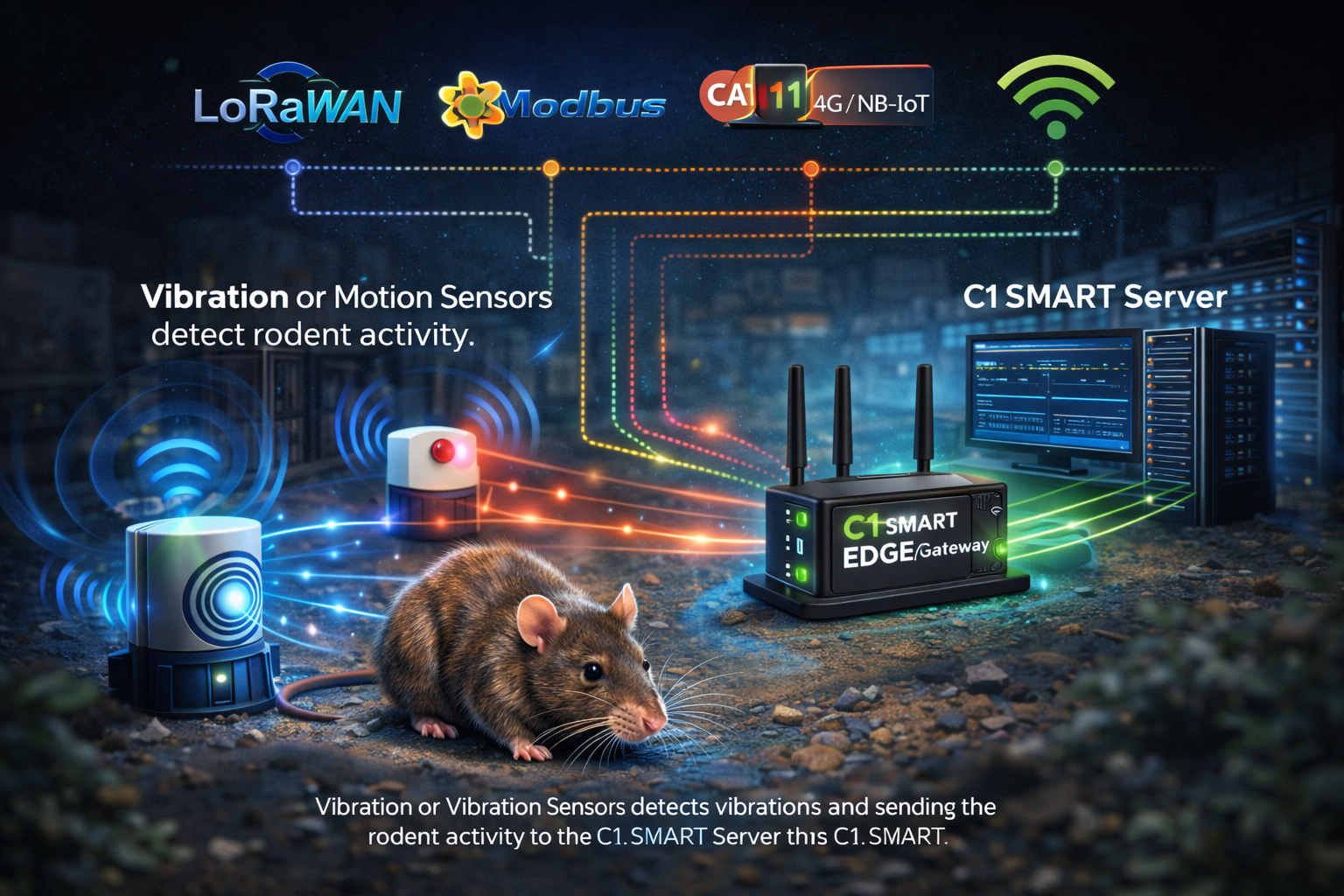
Secure data bridge from sensors & smart traps to C1 SMART servers.
Multi-protocol support: LoRaWAN, RS485/Modbus, Wi-Fi, 4G CAT-1, NB-IoT.
Store-and-forward buffering for reliability.
Site health, RSSI, and device last-seen monitoring.
Supports single building, campus, warehouse, and multi-site rollouts.
Centralized device provisioning, firmware control, and diagnostics.
Edge rules for local actions: alarms, siren, or local notifications.
Enterprise-grade security with role-based access.
Executive dashboards for risk, performance, and compliance visibility.
Site & zone KPIs: trends, recurrence, response time, closure time.
Contractor performance tracking and SLA analytics.
Multi-site comparison and benchmarking.
Map high-risk zones, identify recurring infestation routes.
Automated escalations for repeated events and critical areas.
Integrate with CAFM/CMMS for work orders and preventive tasks.
Export-ready reports for management and audits.
Visual heatmaps of rodent activity by zone, time, and severity.
Identify entry points, movement paths, and repeat locations.
Overlay by facility layout and operational zones.
Track improvement after actions and baiting cycles.
Supports floor-wise heatmaps for buildings and campuses.
Separate views: perimeters, waste areas, kitchens, docks, storage.
Trend forecasting for seasonal spikes and high-risk periods.
Evidence-based placement recommendations.
Auto-generated rodent monitoring and compliance reports.
Daily / weekly / monthly summaries with activity timelines.
Trap events, sensor alerts, technician visits, and closures.
Audit-ready evidence packs for inspections and authorities.
Reports include: activity count, heatmaps, hotspots, recurrence trends.
MTTA / MTTR, response efficiency, and contractor SLA scorecards.
Export to PDF / Excel with branded, site-wise templates.
Consolidated reporting across zones, buildings, and multi-site operations.
Protect farms, barns, feed storage, and crop processing areas.
Monitor perimeters and storage points for early activity detection.
Reduce losses and contamination risk with timely actions.
Weather-aware activity pattern analytics.
Applicable for poultry farms, dairy farms, cattle sheds, goat & sheep farms, grain silos, feed mills, seed storage, crop warehouses, and greenhouse facilities.
Recommended: at least 2–3 RodentSense nodes per storage, shed, or barn zone.
Heatmaps highlight recurring routes near feed lines, waste pits, and water sources.
Monitor kitchens, stores, waste rooms, basements, and perimeters.
Protect guest areas with silent detection and rapid response alerts.
Track contractor visits and corrective actions with audit trails.
Reduce complaints and reputational risk.
Recommended: 2–3 sensors per critical zone (kitchen, store, waste).
Heatmap-based placement for docks, service corridors, bin areas.
Automated reports for management and municipality inspections.
Multi-property dashboards for hotel groups.
Continuous monitoring for production halls, packaging, and raw stores.
Reduce contamination risks with instant escalation workflows.
Track incidents near high-risk areas: docks, silos, and waste lines.
Analytics support preventive controls and audits.
Recommended: 2–3 nodes per warehouse/ingredient store + dock areas.
ULTRA tier supports multi-line factories and multi-site operations.
Full traceable incident history for compliance documentation.
Integrates with CMMS for work orders and preventive tasks.
Monitor kitchens, stores, false ceilings, and waste collection points.
Instant alerts for rodent activity to prevent overnight escalation.
Simple LITE deployment for single outlets and cafés.
Compliance-ready logs for inspections.
Recommended: 2–3 sensors per outlet (kitchen + store + waste).
Mobile alerts + technician workflow for quick closure.
Heatmap shows repeated activity zones for corrective sealing.
Scales to franchise chains via PRO/ULTRA dashboards.
Monitor hospitals, clinics, labs, stores, and service corridors.
High-priority alerting for sensitive areas and infection control zones.
Full audit trail for compliance and facility safety programs.
Multi-building campus visibility.
Recommended: 2–3 nodes per critical zone + perimeter coverage.
Heatmaps support zoning and prevention near waste and kitchens.
ULTRA supports multi-site hospital networks with centralized reports.
Integrates with CAFM/CMMS and incident ticketing workflows.
Monitor controlled environments, warehouses, and utility corridors.
Maintain hygiene and contamination control with strict logging.
High-sensitivity escalation rules with SLA-based workflows.
Evidence pack reporting for audits.
Recommended: 2–3 sensors per storage/utility corridor segment.
ULTRA analytics provide trend insights and hotspot recurrence.
Role-based access and audit logs for regulated operations.
Works across multi-site manufacturing and storage networks.
Monitor docks, pallet zones, racking aisles, and perimeter points.
Detect activity near goods storage to prevent damage and loss.
Track repeated incidents per dock/zone for corrective actions.
Contractor and SLA performance dashboards.
Recommended: minimum 2–3 RodentSense nodes per warehouse zone/aisle.
Add coverage at docks, waste areas, and external perimeters.
Heatmaps reveal entry paths and high-risk routes.
Multi-site dashboards for logistics networks and hubs.
Monitor backrooms, receiving docks, cold rooms, and waste zones.
Protect food areas and reduce loss and compliance risks.
Chain-level dashboards for multiple stores and regions.
Rapid alerting for store managers and contractors.
Recommended: 2–3 sensors per store (dock + store + waste/utility).
Heatmaps help optimize placement for repeat incident locations.
Auto reports for audit and franchise compliance.
Scales to retail chains using PRO/ULTRA.
Monitor waste yards, compactors, sorting lines, and bin rooms.
Identify infestation zones early with persistent monitoring.
High-frequency alerts for critical hotspots and repeated events.
Evidence-based mitigation planning.
Recommended: 2–3 sensors per waste zone + perimeter coverage.
Heatmaps show hotspot density and seasonal spikes.
ULTRA supports large sites and municipal waste operations.
Service reporting for contractors and compliance teams.
Monitor basements, garbage rooms, corridors, and perimeters.
Community-level dashboards for property managers and FM teams.
Automated alerts and scheduled inspections based on events.
Central reporting across towers and blocks.
Recommended: 2–3 sensors per block/zone (waste + basement + perimeter).
Heatmaps identify recurring locations for sealing and corrective work.
Integrates with CAFM/CMMS for work orders and preventive tasks.
ULTRA enables multi-community management.
LITE kit for garages, kitchens, stores, and outdoor perimeters.
Instant alerts for early detection and fast intervention.
Works with smart traps or standalone sensor stations.
Simple mobile-based monitoring.
Recommended: 2–3 sensors per villa (garage + store + perimeter).
Add sensors near waste bins and garden storage areas.
Heatmap-style view of zones to identify repeated activity.
Easy upgrades from LITE to PRO as coverage expands.
City-scale monitoring for public buildings, parks, markets, and waste points.
Central command dashboards with ward/zone-level heatmaps.
Contractor oversight, SLA scoring, and compliance reporting.
Multi-site and multi-department visibility.
ULTRA tier supports enterprise and municipality rollouts at scale.
Map hotspots across districts and prioritize interventions.
Automated reporting for inspections and governance.
Integrates with municipal ticketing and CMMS systems.
Protect storage areas, cold rooms, and high-value goods.
Monitor doors, docking points, and racking aisles.
Detect activity before it becomes a costly infestation.
Evidence logs for insurance and compliance.
Recommended: 2–3 sensors per storage zone + dock/perimeter nodes.
Heatmaps show high-risk entry points and repeat paths.
PRO/ULTRA supports multi-site warehouse networks.
Alerts route to security/FM/contractors instantly.
Monitor gardens, landscapes, pump rooms, and perimeter zones.
Identify rodent activity near water lines and green areas.
Reduce damage to irrigation pipes and landscaping assets.
Outdoor-ready monitoring with flexible placement.
Recommended: 2–3 sensors per landscape zone + near pump rooms.
Heatmaps highlight repeated activity around waste and water points.
Supports villas, compounds, parks, and campuses.
Alerts support proactive prevention and sealing.
Measure activity levels by zone, time, and severity.
Identify recurrence patterns and repeat locations.
Trend analysis for seasonal spikes and operational risk periods.
Data-backed decisions for placement and mitigation.
Analytics include: hotspot index, recurrence rate, MTTA/MTTR.
Compare performance across sites, contractors, and zones.
Predictive alerts for potential infestation escalation.
Supports executive KPI dashboards and reporting.
Smart response workflows: inspect → act → verify → prevent.
Optimize trap placement and service routes using heatmaps.
Automated task creation for sealing, cleaning, and corrective works.
Contractor management with SLA and performance scoring.
Integrates with CAFM/CMMS for work orders and preventive actions.
Track technician actions, materials, and closure evidence.
Continuous improvement loop using analytics and recurrence insights.
Supports enterprise and multi-site operational control.
Assess kitchens, stores, docks, basements, false ceilings, waste areas, drains, perimeters, and utility rooms to identify rodent entry points and hotspot zones.
Choose RodentSense motion + vibration sensors, smart trap monitoring, and station types (LITE/PRO/ULTRA) with recommended placement density per zone and site.
Install RodentSense devices with or without traps, enable tamper protection, label zones, and activate alerts for rodent activity, trap triggers, and repeated events.
Transmit data through C1 SMART™ eDGE gateways via LoRaWAN/NB-IoT/CAT-1/Wi-Fi to dashboards, heatmaps, analytical reports, compliance logs, and CMMS/CAFM workflows.